
Paver Patio vs Concrete Patio in North Texas
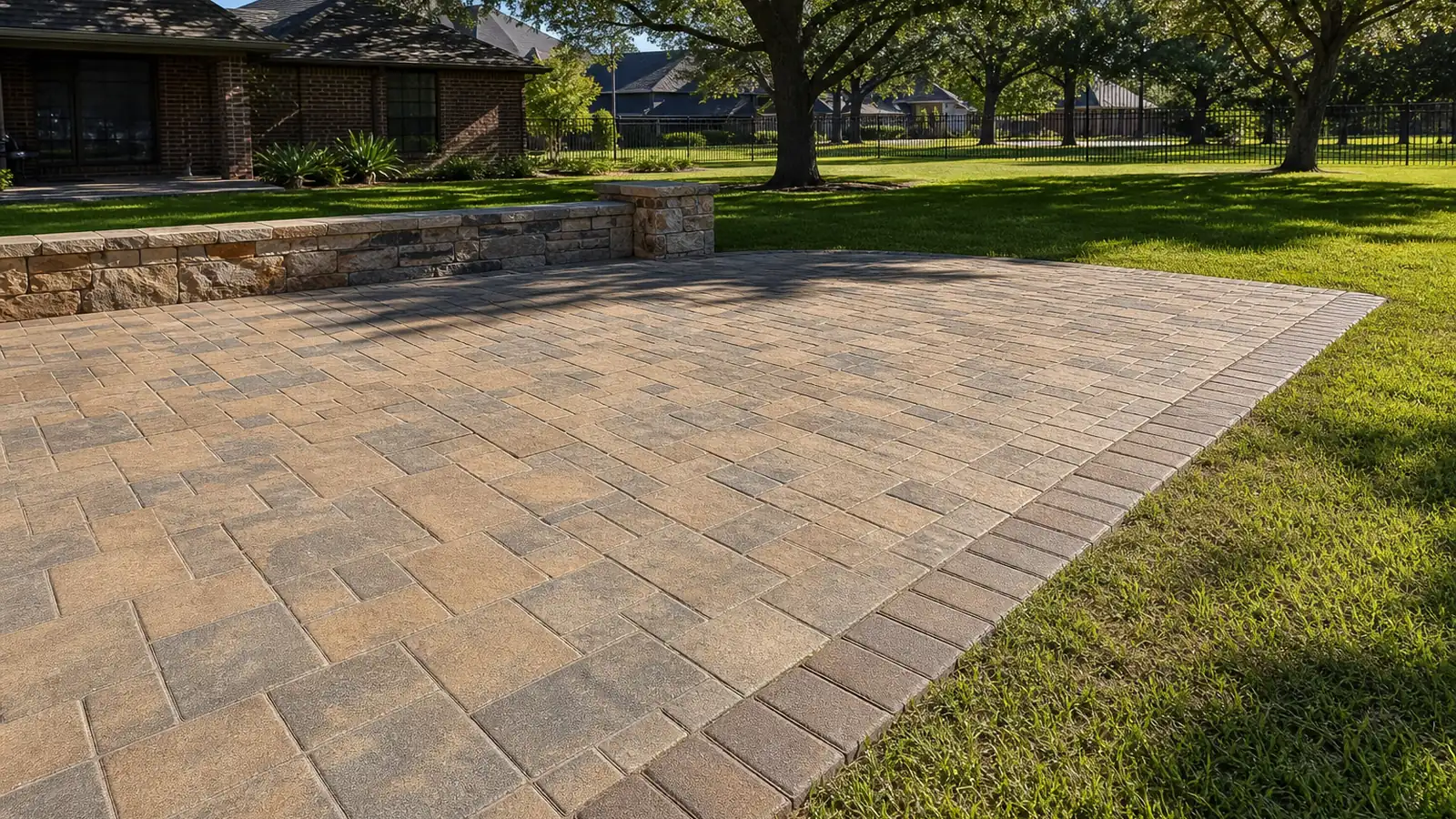
Pavers flex and concrete cracks, and in North Texas clay that single difference decides most of this comparison. An interlocking paver surface moves with the soil in thousands of small joints and can be lifted and relaid if a section settles. A poured slab is one rigid piece sitting on soil that swells and shrinks with every wet and dry cycle. It responds to that movement the only way a rigid thing can. Concrete still wins on upfront price and simplicity, which is why the choice deserves a real comparison rather than a reflex.
This guide compares the two surfaces on the points that matter here. Those are clay movement, cost on day one versus cost over the life of the patio, repair, looks, and maintenance. It is the sibling to the flagstone versus paver comparison. It is aimed at homeowners across Keller, Colleyville, and North Richland Hills weighing the two most common patio surfaces in the area.
Ready to get started? Conroy's Lawn & Landscape provides professional lawn care and landscaping across Keller, Southlake, Grapevine, Colleyville, and the surrounding North Texas communities. Call 817.745.0424, text 817.909.6875, or email service@conroyslawnandlandscape.com for a free quote today.
What does clay soil do to each surface?
North Texas clay swells when it rains and shrinks when it bakes, and everything built on it rides that movement. The two surfaces answer the movement in opposite ways, and the difference shows up within a few seasons.
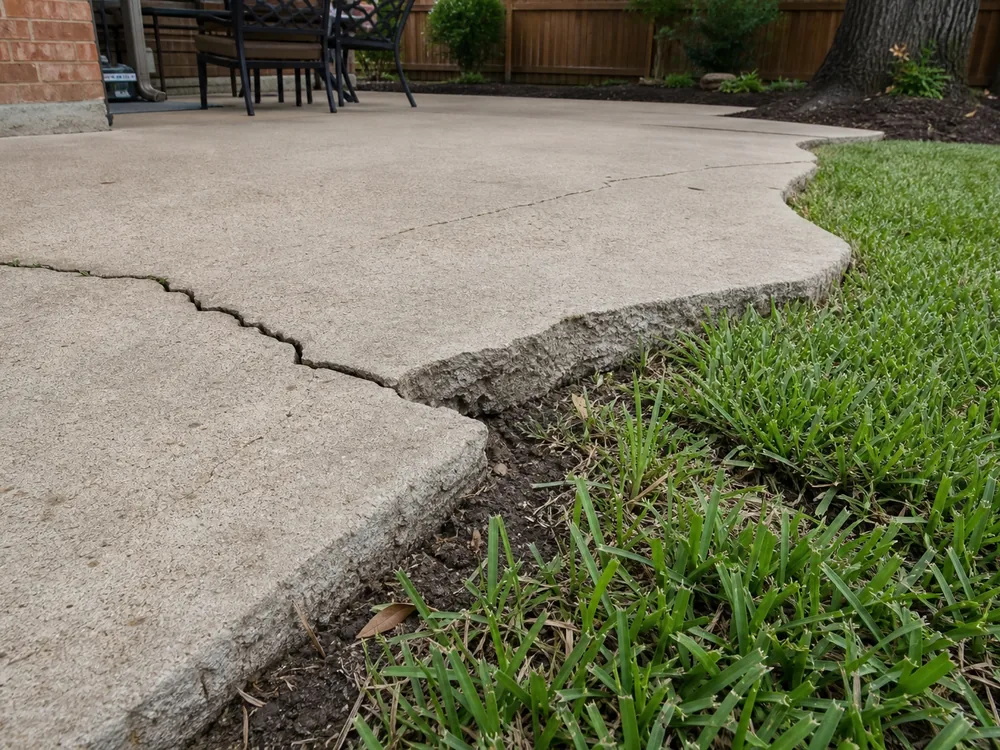
A paver surface is thousands of small units on a compacted base, held by edge restraint and joint sand. When the soil moves, the surface flexes in tiny increments across all those joints, and the system absorbs what would crack a rigid slab. A poured slab has no give. Control joints are cut into it precisely because concrete will crack somewhere, and the joints are an attempt to choose where. Clay movement adds cracks the joints never planned for. It also brings the slow heave and settle that leaves one corner of a slab higher than the door threshold it started level with.
Does base preparation change the outcome?
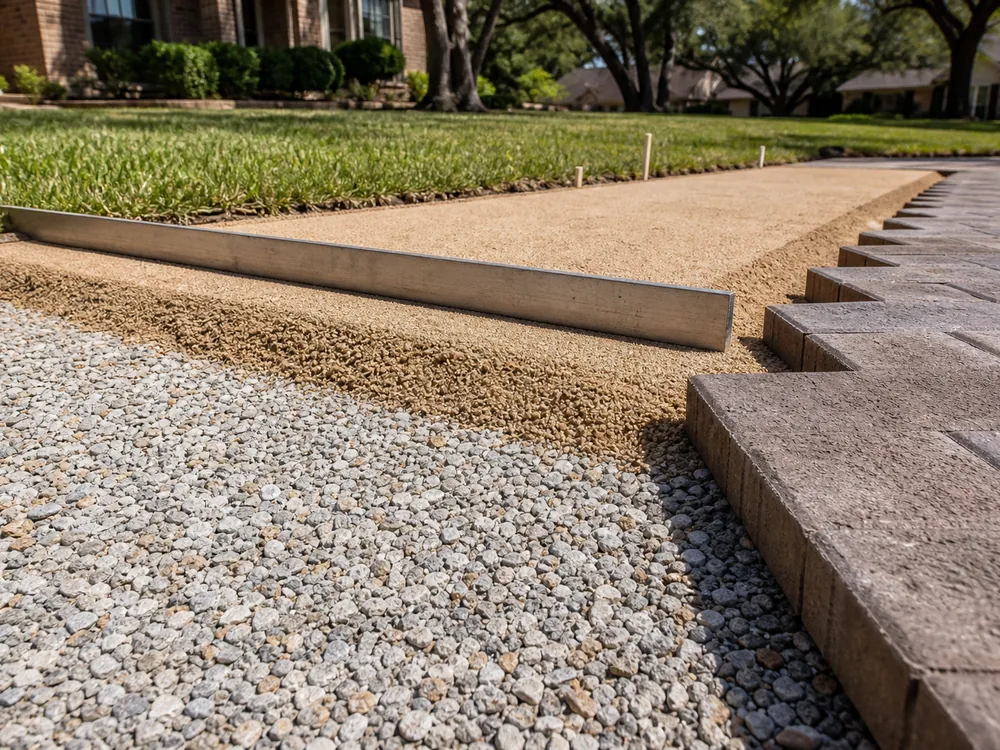
It sets the ceiling for both. A paver patio on a poor base settles into waves, and a slab on a poor base cracks early and badly. Excavation to stable soil and a compacted aggregate base are non-negotiable either way. It is the same story told in the patio timing guide and the contractor hiring guide. The difference is what happens after the base does its best: pavers ride the remaining movement, concrete records it.
How do the two compare line by line?
| Factor | Pavers | Poured concrete |
|---|---|---|
| Upfront cost | Higher than plain concrete | Lowest for broom finish; stamped narrows the gap |
| Clay movement | Flexes across joints | Cracks and heaves record it permanently |
| Repair | Lift, fix base, relay invisibly | Patches show; repours rarely match |
| Looks | Patterns, borders, blended colors | Plain, broom, or stamped finishes |
| Surface heat | Color-dependent, light options run cooler | Color-dependent, sealed stamped runs hot |
| Maintenance | Joint sand top-up, optional sealing | Crack sealing, periodic resealing for stamped |
| Build time | Days, usable immediately | Pour plus cure time before use |
The honest summary of the table: concrete is the budget choice and a fine one for small, low-stakes surfaces. Pavers are the durability-and-looks choice that costs more up front and less to own. Stamped concrete sits in an awkward middle, priced near pavers while keeping all of concrete's cracking behavior. That is why the stamped-versus-paver decision usually tips toward pavers here.
What does each cost over the life of the patio?
Day-one price and ten-year cost tell different stories. Plain concrete wins the first number in almost every bid. The second number depends on what the clay does, and the clay always does something.
- Plain broom-finish concrete is the cheapest to build. Its repairs are visible patches or a saw-cut section repour that never quite matches, and a badly heaved slab ends in demolition.
- Stamped or decorative concrete adds color and pattern cost up front, plus periodic resealing to keep the finish, while keeping the same cracking behavior underneath.
- Pavers cost more on day one. Their repairs are cheap, local, and invisible, and a paver surface can be partially rebuilt forever without replacing the whole patio.
The pattern across Tarrant County repair calls is consistent. The homeowners who regret their surface are almost never the ones who chose pavers. They are almost always the ones with a five-year-old stamped slab showing a crack through the middle of the pattern. Exact prices vary by site and season. The numbers belong on a written quote after a walk-through rather than in a blog post.
Ready to get started? Conroy's Lawn & Landscape provides professional lawn care and landscaping across Keller, Southlake, Grapevine, Colleyville, and the surrounding North Texas communities. Call 817.745.0424, text 817.909.6875, or email service@conroyslawnandlandscape.com for a free quote today.
Which surface is more comfortable to live on?
Comfort splits three ways: heat, texture, and glare. Heat tracks color more than material, so a light paver and a light broom-finish slab perform similarly in July. Dark stamped concrete under sealer is reliably the hottest surface in the yard. Texture favors pavers and broom finish over smooth stamped patterns, which get slick when wet around pools. Glare favors anything with color variation, which is why large plain slabs read harsh at midday and blended paver tones stay easy on the eyes.
None of these are dealbreakers on their own. They are the small daily differences a family lives with for twenty years, which is exactly why they belong in the decision alongside price.
When is concrete still the right call?
Concrete keeps a legitimate place, and pretending otherwise would be salesmanship rather than advice. It is the sensible choice for utility surfaces where looks and longevity matter less: a small equipment pad, a narrow side-yard walk, a shed base. It also suits projects where the budget simply does not reach pavers and the alternative is building nothing. A well-built plain slab on a proper base still outperforms a cheap paver job on a bad one.
The place concrete earns real caution is the main entertaining patio, the surface a family will look at and live on for decades. That is where clay movement, repairability, and looks all compound, and where the paver premium buys the most. A patio is among the most visible investments on a property, and the surface choice is the one decision that cannot be revisited cheaply later.
Patio surfaces across Keller and Tarrant County
Our crews build paver patios across Keller, Colleyville, Southlake, Grapevine, and the surrounding cities, and the local pattern maps to lot and budget. North Richland Hills and Watauga projects weigh the concrete option most seriously. The honest conversation there is often plain concrete done right versus pavers phased smaller. Colleyville and Southlake projects almost always land on pavers or a paver-and-stone mix, where the design flexibility carries the decision as much as durability does.
Billy Conroy walks every site before a quote, because slope, drainage, and access change the numbers for both surfaces. The comparison gets made with samples on the actual ground, next to the actual brick. Finished surfaces of both kinds are in the stone work and pavestones gallery. The full construction approach is covered under stone borders, retaining walls, and patios.
Frequently asked questions about pavers versus concrete
Does poured concrete always crack in North Texas?
Concrete cracks by design, which is why slabs get control joints that tell the cracks where to run. The North Texas problem is clay movement, which produces cracks the joints never planned for. Good base preparation and reinforcement slow it down, but a rigid slab on active clay eventually shows lines.
Are pavers more expensive than poured concrete?
Usually yes on day one, since pavers cost more in material and labor than a plain broom-finish pour. The gap narrows against stamped or decorative concrete. It can reverse over the life of the patio, because paver repairs are cheap and invisible while slab repairs are neither.
Which patio surface is easier to repair?
Pavers, by a wide margin. A settled or damaged section can be lifted, the base corrected, and the same units relaid with no visible scar. A cracked slab can be patched, which shows, or cut out and repoured, which rarely matches the original color and finish.
Can pavers be installed over an existing concrete slab?
Sometimes, if the slab is sound, drains properly, and the added height works at doors and steps. It saves demolition cost, but it inherits the slab's problems: if the concrete underneath keeps moving, the pavers on top move with it. A cracked, heaving slab is a poor foundation for anything.
Ready to get started? Conroy's Lawn & Landscape provides professional lawn care and landscaping across Keller, Southlake, Grapevine, Colleyville, and the surrounding North Texas communities. Call 817.745.0424, text 817.909.6875, or email service@conroyslawnandlandscape.com for a free quote today.