
How to Hire a Hardscape Contractor in Keller, TX
Hiring a hardscape contractor comes down to comparing what each bid actually builds, not what each bid costs. The quality of a patio or retaining wall is decided by excavation depth, base preparation, and drainage. None of those are visible in the finished photos a contractor shows you. A complete written quote names those items with numbers. A vague one hides them, and the gap between two bids is almost always hiding in that vagueness.
North Texas raises the stakes, because clay soil punishes shortcuts that would go unnoticed in stable ground for decades. This guide covers what a real hardscape quote includes and the questions that quickly separate builders from block-stackers. It also covers the red flags worth walking away from, and how to compare bids that look thousands of dollars apart. The advice applies to patios, retaining walls, walkways, and outdoor kitchens across Keller, Colleyville, Southlake, and the surrounding Tarrant County cities alike.
Ready to get started? Conroy's Lawn & Landscape provides professional lawn care and landscaping across Keller, Southlake, Grapevine, Colleyville, and the surrounding North Texas communities. Call 817.745.0424, text 817.909.6875, or email service@conroyslawnandlandscape.com for a free quote today.
What should a hardscape quote actually include?
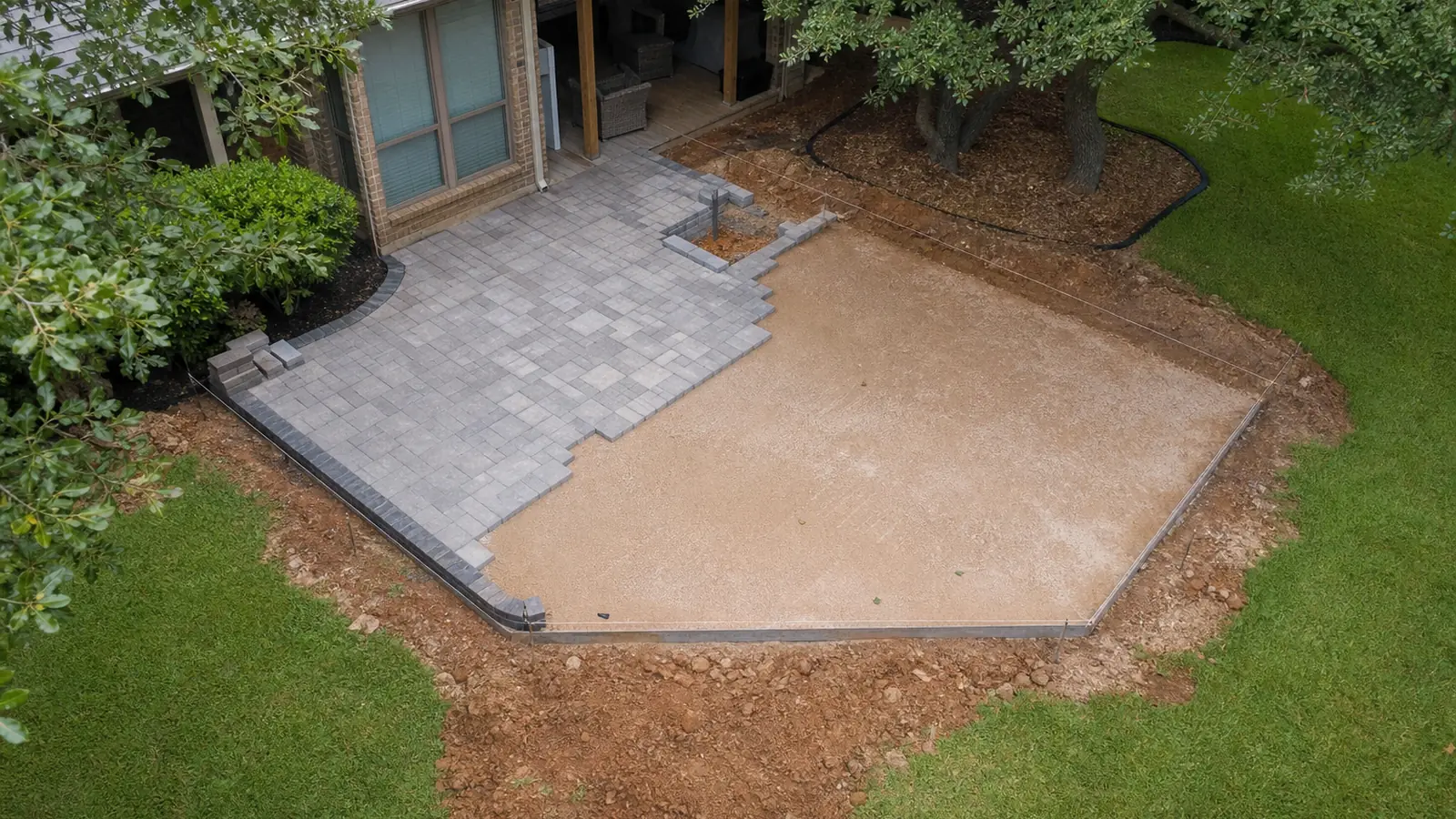
A complete quote reads like a build plan, not a price tag. It names the work below the surface with numbers attached, because that is where projects succeed or fail in clay soil. Before comparing prices, check every bid against this list.
- Excavation depth in inches, and what happens to the spoil that comes out.
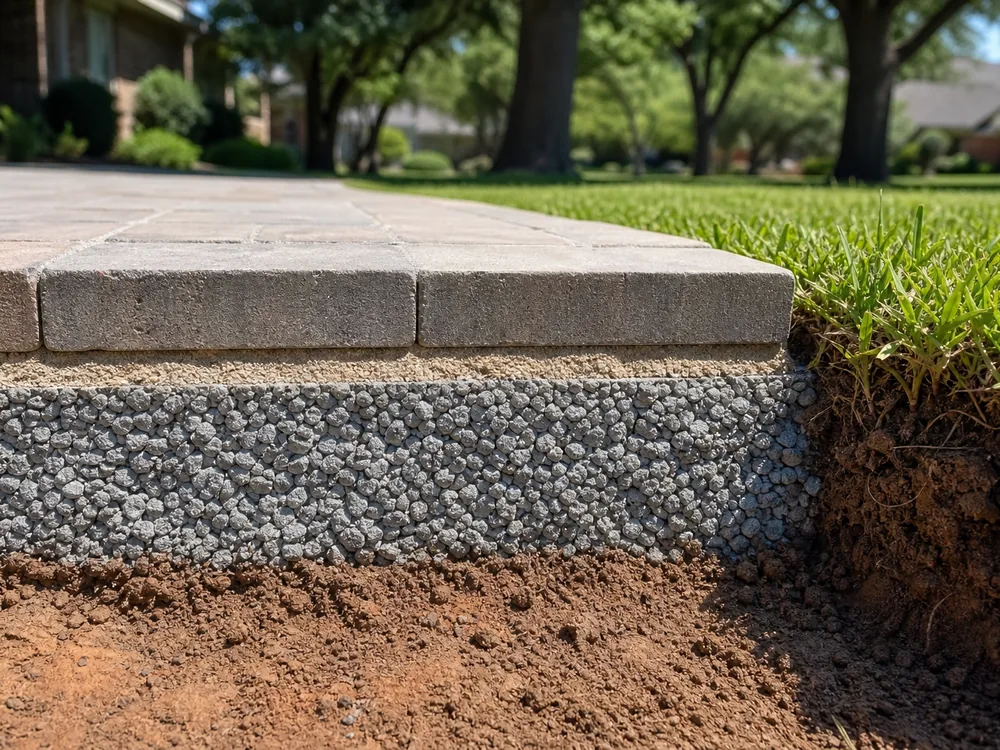
- Base material and thickness, compacted crushed aggregate stated in inches, not "prepared base."
- Compaction method, in lifts with a plate compactor rather than dumped and raked.
- Drainage, where surface water goes, and gravel plus pipe behind any retaining wall.
- Edge restraint, what holds the border of a paver surface in place.
- The material by name, the specific paver line or stone, plus the joint treatment.
- Utility locates, who calls them in before digging, which is required, not optional.
- Start window, duration, and payment schedule, with a modest deposit rather than most of the money up front.
A bid that lists length, material, and a total is not a cheaper version of the same project. It is a different and smaller project wearing the same name. Asking each bidder to confirm the items above in writing costs nothing, takes one email, and immediately shows who plans to build what. The same list applies whether the surface is flagstone or pavers.
Which questions separate a builder from a block-stacker?
Five minutes of the right questions tells you more than an hour of portfolio photos. The point is not to trap anyone. A builder who works North Texas clay every week has ready, specific answers. A crew that learned on stable soil does not.
What do you do differently because this is clay soil?
The right answer mentions deeper excavation, thicker compacted base, moisture at the time of compaction, and drainage. A shrug, or a claim that the process is the same everywhere, is a bad sign. It means the builder has not thought about the one factor that breaks hardscape here. Clay swells and shrinks with the seasons, and everything built on it has to be designed for that movement.
Where does the water go when you are done?
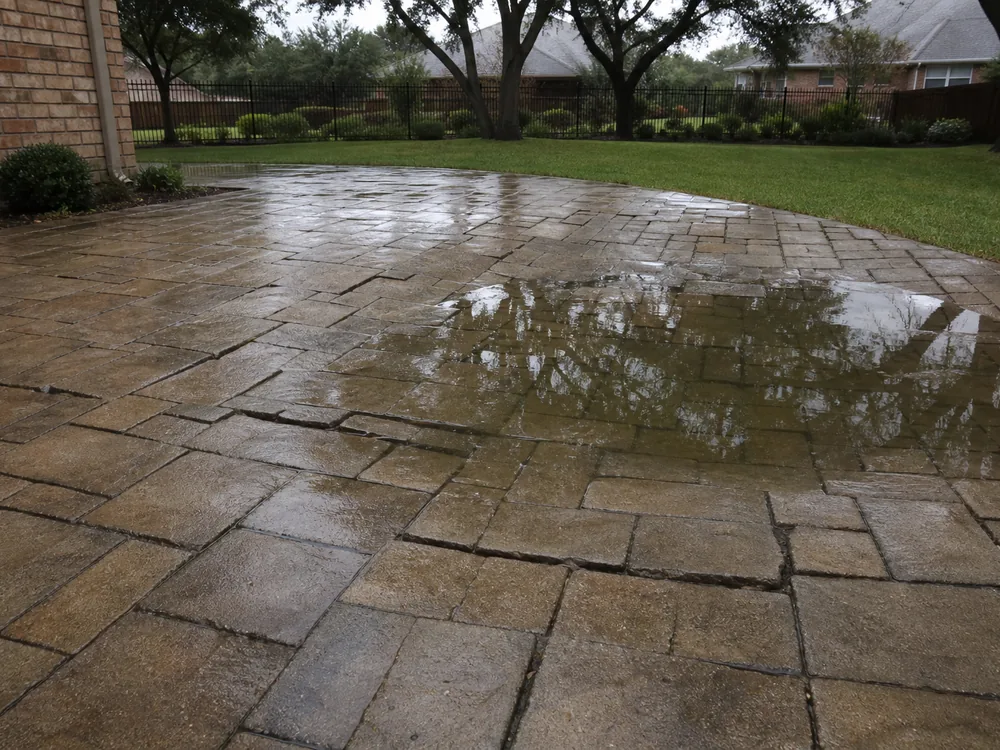
Every hard surface sheds water somewhere. A professional answers with specifics: the direction of fall built into the surface, where the runoff daylights, and what protects the foundation side. If the project involves any grade change, the answer should include gravel backfill and a drain pipe. Those are the same principles covered in what drives retaining wall cost.
Who is actually on my property, and who checks the work?
Ask whether the crew is the builder's own or a subcontractor, and who inspects the base before anything goes on top of it. The base is the one stage that cannot be checked after the fact, so someone accountable needs eyes on it before it disappears under stone. Owner-supervised operations have a direct answer to this question.
What are the red flags worth walking away from?
Most bad outcomes announce themselves before the contract is signed. These are the signals that reliably precede the failed projects that end up needing repair or a full rebuild.
| Red flag | Why it matters |
|---|---|
| Price per square foot quoted over the phone | Nobody can price a site they have not seen; slope, access, and soil change everything |
| No mention of base depth or compaction | The most likely corner being cut, and the most expensive one to fix later |
| Large deposit demanded up front | A modest deposit is normal; most of the money before work starts is not |
| No written quote, or a one-line quote | What is not written down is not promised |
| Cannot show proof of insurance | You carry the risk if something goes wrong on your property |
| No mention of utility locates | Digging without locates is illegal and dangerous, and it signals a rushed operation |
| Pressure to sign today for a discount | Real schedules fill on their own; manufactured urgency covers weak work |
None of these guarantee a bad job on their own. Two or three together is a pattern, and the repair market runs on homeowners who noticed the pattern after the deposit cleared rather than before.
How do you compare bids that are thousands apart?
Line them up item by item against the quote checklist above, and price the difference rather than the total. When bid A is thousands under bid B, find the line where they diverge. It is usually excavation depth, base thickness, or drainage. At that point the comparison becomes honest: bid A is cheaper because it builds less of the part that keeps the surface flat.
Then weigh the difference against the life of the project. A patio or wall in North Texas is a ten to thirty year surface. Spread across that life, the gap between the bids is usually small money. It buys the difference between a surface that stays flat and one that settles within a few wet seasons. Rebuilding starts with demolition, so doing it once properly is the cheap option even when it is the expensive bid.
Ready to get started? Conroy's Lawn & Landscape provides professional lawn care and landscaping across Keller, Southlake, Grapevine, Colleyville, and the surrounding North Texas communities. Call 817.745.0424, text 817.909.6875, or email service@conroyslawnandlandscape.com for a free quote today.
Hiring hardscape help across Keller and Tarrant County
Our crews build patios, walls, and walkways across Keller, Colleyville, Southlake, Grapevine, Trophy Club, and Westlake, and every project starts the same way. Billy Conroy walks the property before any number is quoted. The written quote names excavation, base, compaction, drainage, edge restraint, and material line by line. That is not a sales flourish. It is the checklist above, applied to our own bids, because a quote you can verify is the only kind worth signing.
The practical advantage of hiring locally in Tarrant County is soil familiarity. A crew that compacts base in Keller clay every week knows how it behaves dry in August and saturated in May, and builds accordingly. Finished work is in the project gallery, and the trade-offs between surfaces are covered under stone borders, retaining walls, and patios. Reviews from area homeowners show how the process runs from first walk-through to cleanup.
Frequently asked questions about hiring a hardscape contractor
How many hardscape quotes should I get?
Two or three is enough when they are compared properly. More quotes rarely add information, because the spread comes from what each bid includes rather than from the market. Compare line items, excavation depth, base thickness, and drainage rather than the bottom number alone.
Why is the lowest hardscape bid usually the risky one?
Because hardscape cost lives underground. A low bid usually trims excavation depth, base material, or drainage. Those items are invisible on day one and decide whether the surface is still flat in five years. In North Texas clay those shortcuts show up as settling, lipped edges, and open joints.
Should a hardscape contractor be insured?
Yes. Ask for proof of general liability insurance before work begins, and confirm who is responsible if underground utilities are damaged. A professional builder calls in utility locates before digging and can show insurance without hesitation. Reluctance on either point is a reason to move on.
What should a hardscape warranty cover?
Ask what the builder covers on workmanship, for how long, and what voids it. The honest answers deal with settling and base failure, which are workmanship, versus material color fade, which is not. Get whatever is promised in writing on the quote rather than in conversation.
Ready to get started? Conroy's Lawn & Landscape provides professional lawn care and landscaping across Keller, Southlake, Grapevine, Colleyville, and the surrounding North Texas communities. Call 817.745.0424, text 817.909.6875, or email service@conroyslawnandlandscape.com for a free quote today.