
French Drains for North Texas Clay Soil
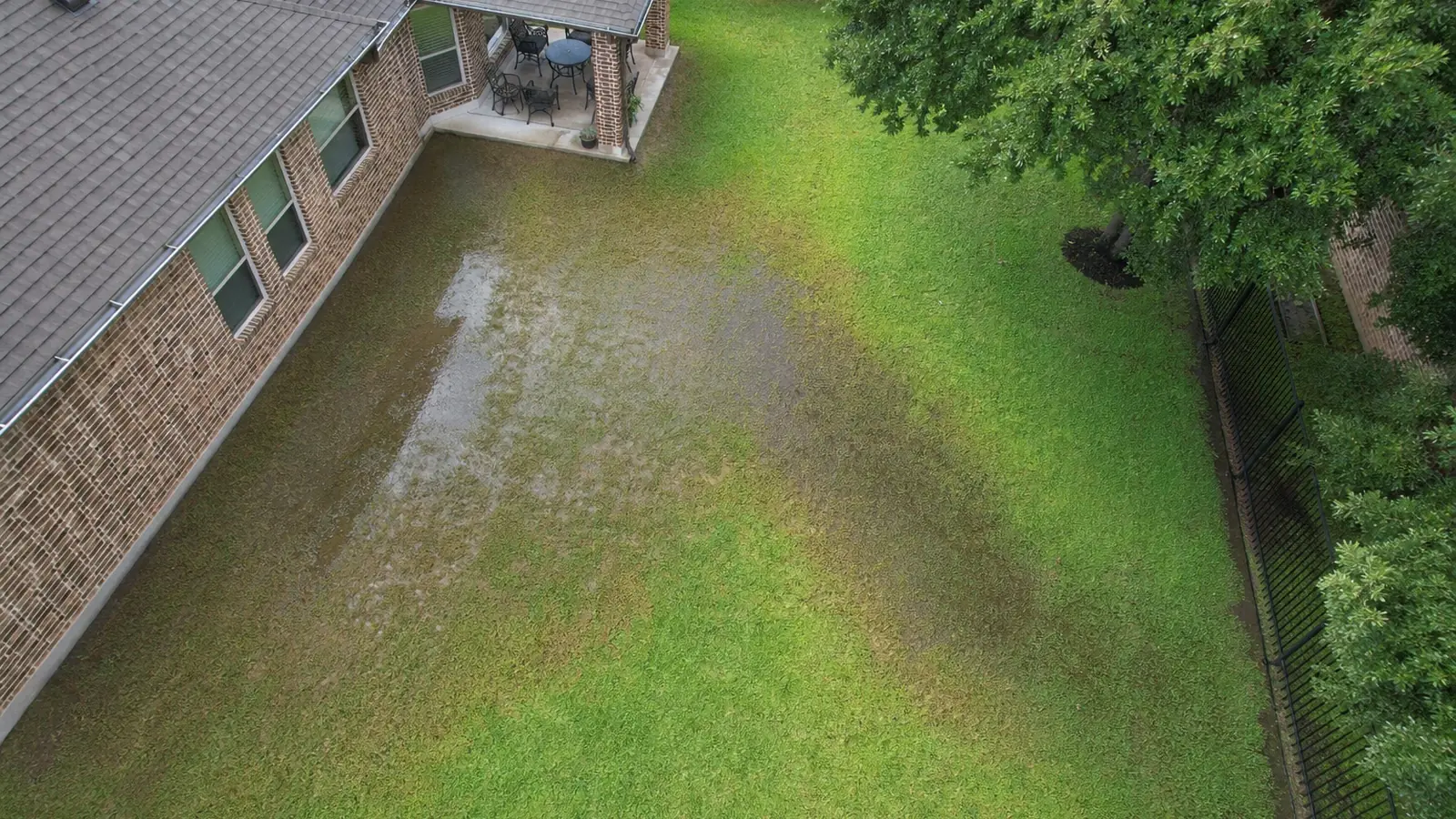
A French drain is a gravel-filled trench with a perforated pipe at the bottom that collects water and carries it somewhere safe. It is the right fix when water collects in a defined low area, along a foundation, or against a retaining wall. It is the wrong fix for broad sheet flow across a yard, which regrading handles better and cheaper. In North Texas clay, which absorbs water slowly and holds it for days, knowing which problem you have is most of the answer.
This guide covers how to tell a French drain problem from a grading problem, and how a proper drain is built. It also covers where the shortcuts hide, where the collected water is allowed to go, and what clay soil specifically demands. Standing water is one of the most common calls across Keller, Colleyville, and Southlake every fall. The fix is usually simpler than homeowners expect once the diagnosis is right.
Ready to get started? Conroy's Lawn & Landscape provides professional lawn care and landscaping across Keller, Southlake, Grapevine, Colleyville, and the surrounding North Texas communities. Call 817.745.0424, text 817.909.6875, or email service@conroyslawnandlandscape.com for a free quote today.
Do you need a French drain or better grading?
Watch where the water sits, and the yard will tell you which fix it needs. The two problems look similar after a storm and need different answers. Paying for the wrong one is the most common drainage mistake in Tarrant County yards.
| What you see | The problem | The usual fix |
|---|---|---|
| Water pooled in one defined low spot for a day or more | Collected water with no outlet | French drain or catch basin |
| Wide shallow wetness across the lawn | Sheet flow with not enough fall | Regrading |
| Soggy strip along the foundation | Roof water dumping at the slab | Downspout extensions first, drain second |
| Wet seep at the base of a slope or wall | Subsurface water moving downhill | French drain at the toe of the slope |
| Puddles on a patio or walkway | Surface built without fall | Surface correction, not a drain |
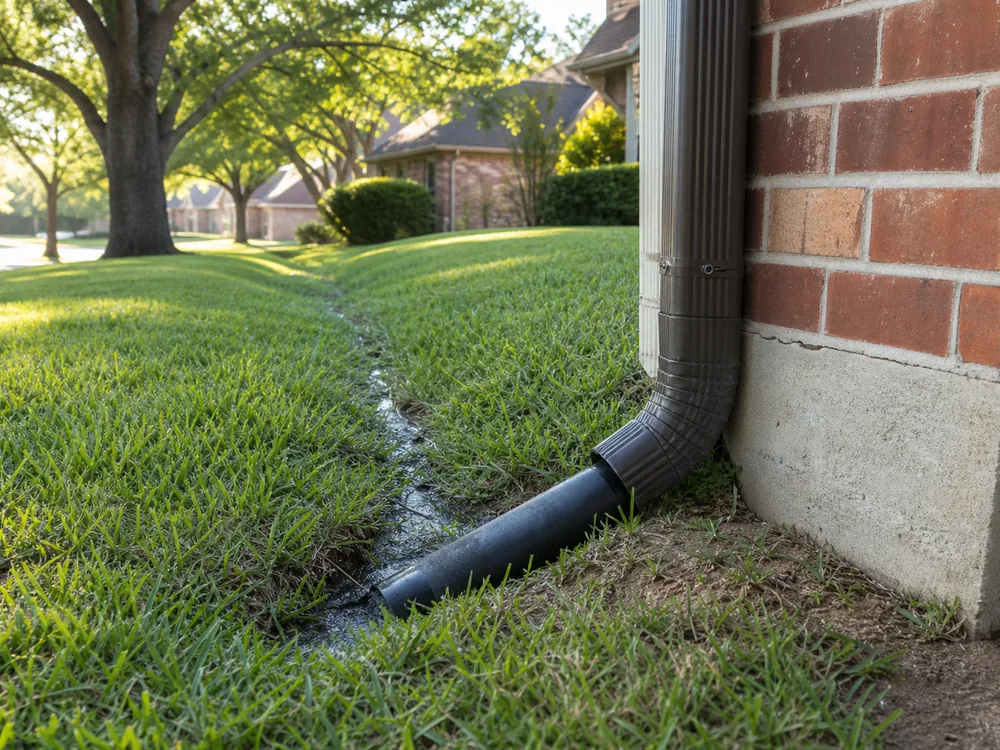
Downspouts deserve the first look on almost every wet-foundation call. A single downspout can deliver hundreds of gallons to one spot in a storm. Extending or burying that line to daylight is one of the least expensive drainage fixes available. Checking it before designing anything bigger is the honest order of operations. The same logic runs through the broader storm advice in smart drainage solutions for North Texas.
How is a proper French drain built?
The parts are simple, and every one of them exists for a reason. Skipping any of them is how a drain becomes a soggy buried trench, and the shortcuts are invisible the day the crew leaves. This is the sequence a correct build follows.
- Utility locates first. Required by law before digging, and gas, cable, and irrigation lines run exactly where drains want to go.
- Trench with consistent fall. The pipe must drop steadily along its whole run toward the outlet. A flat or wavy trench holds water underground.
- Fabric lining. Landscape fabric wraps the gravel envelope so clay fines cannot migrate in and clog it. In North Texas clay this is the difference between decades and a few years of service.
- Washed gravel bed, then the perforated pipe, then more gravel over and around it.
- Fabric closed over the top, then soil and turf, or decorative rock where the drain doubles as a dry creek bed.
- An outlet that daylights, to a street gutter, an approved connection, a dry well, or a safe low area, never onto a neighbor's property.
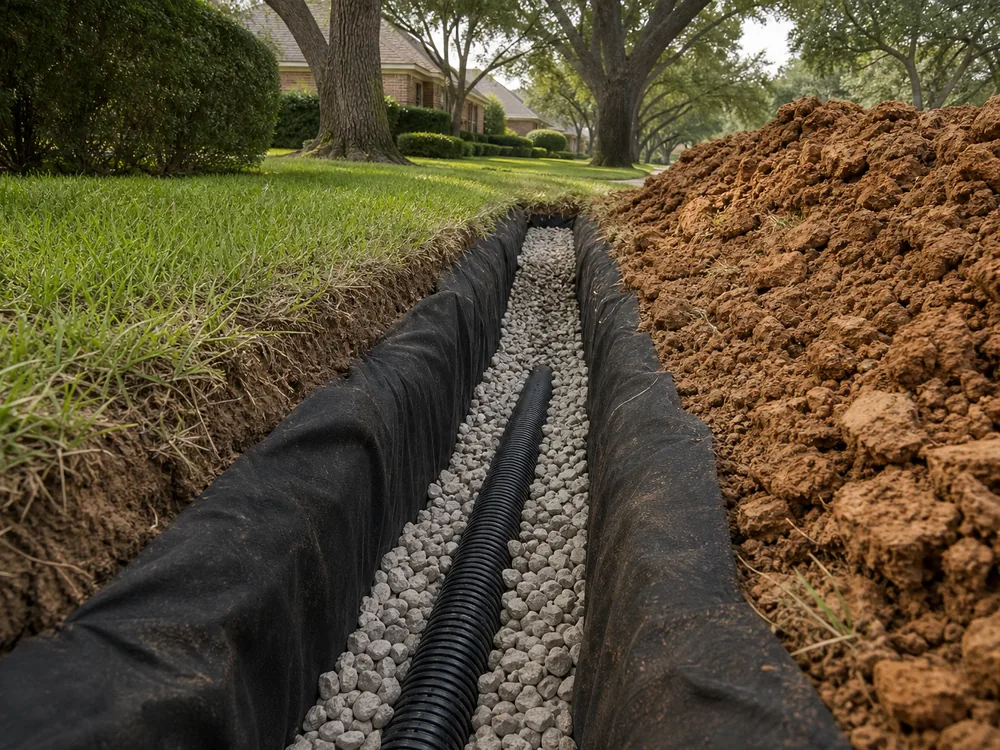
The two failure points are fall and fabric. Fall cannot be eyeballed on a long run, which is why proper builds are checked with a level or laser as the trench cuts. Fabric feels optional right up until the clay silts the gravel solid. When a drain that worked for two years stops working, one of those two corners was usually cut.
When is a dry creek bed the better answer?
A dry creek bed is a French drain turned into a landscape feature. It is a shallow, rock-lined channel that carries storm water on the surface instead of hiding it underground. It suits yards where the water path crosses open lawn and the volume is large. It also suits homeowners who would rather see attractive stone than mow over a buried line. Between storms it reads as a design element, with boulders and plantings along its edges.
The choice between the two usually comes down to location and looks. Water moving along a fence line or behind beds disappears cleanly into a buried drain. Water crossing the middle of a back yard often does better in a creek bed. It handles bigger surges and never clogs the way a buried pipe can. Plenty of Keller and Southlake yards use both, a creek bed carrying the main flow and a short buried run protecting the foundation side.
What does clay soil change about drainage?
Clay changes the whole problem. Sandy soil drinks rain, so drainage there is about volume. North Texas clay barely absorbs it, so drainage here is about giving surface and shallow subsurface water a route out before it causes damage. That difference shows up three ways.
First, pooling happens fast and lingers, because water that cannot soak in can only evaporate or flow. Second, saturated clay swells and puts real pressure on foundations and retaining walls, which is why standing water near a structure is never cosmetic. Third, the swing between saturated and bone dry is what moves footings, heaves walks, and opens gaps at slab edges. Managing water is managing soil movement. That is the quiet reason drainage work protects the most expensive thing on the lot, which is the house.
Why do drainage problems show up in fall?
Because fall is when the rain returns to soil that summer baked hard. The first big storms of September and October land on clay that sheds water like pavement. Problems that were invisible through a dry summer announce themselves in an afternoon. Fixing drainage in fall also means the work is done before winter, when saturated ground and freeze cycles do their damage together.
Ready to get started? Conroy's Lawn & Landscape provides professional lawn care and landscaping across Keller, Southlake, Grapevine, Colleyville, and the surrounding North Texas communities. Call 817.745.0424, text 817.909.6875, or email service@conroyslawnandlandscape.com for a free quote today.
Drainage work across Keller and Tarrant County
Our crews build French drains, dry creek beds, and regrades across Keller, Colleyville, Southlake, Grapevine, and the surrounding cities. The first step is always the same walk. Billy Conroy looks at slope, where water enters the property, where it collects, and where it can legally go before anything is recommended. Two neighboring yards in Colleyville can flood in the same storm for completely different reasons. The assessment is what keeps a homeowner from buying a drain when the yard needed grading.
Drainage also pairs naturally with other work. A drain trenched before a patio project protects the new surface from day one. Gutters, grading, and bed edges all touch the same water problem. The full service picture is under irrigation, sprinkler repair, and drainage, with Colleyville-specific work at sprinkler repair and drainage in Colleyville. Finished examples are in the water features and drainage gallery.
Frequently asked questions about French drains
How long does a French drain last in clay soil?
A properly built French drain, with washed gravel, fabric wrapping the gravel envelope, and rigid or heavy corrugated pipe, commonly serves for decades. The failures come from skipped fabric, which lets clay fines clog the gravel, and from crushed cheap pipe. Built right, it outlives most other yard improvements.
Where does the water from a French drain go?
It must daylight somewhere legal and safe. That means a street gutter, an approved storm connection, a dry well, or a low area of the property away from structures. It cannot discharge onto a neighbor's lot. Deciding the outlet is the first design step, because a drain with nowhere to send water is a buried trench.
Why is my yard still wet days after it rains?
North Texas clay absorbs water very slowly, so rain sits on the surface or in shallow low spots instead of soaking in. If the wet area holds a day or more, the ground is telling you it has no path out. That is a grading or drainage problem, and it repeats every storm until the water is given a route.
Can I install a French drain myself?
The concept is simple, but the two failure points are exactly where shortcuts happen: consistent fall along the pipe, and a fabric-wrapped gravel envelope. A trench dug without steady slope holds water underground instead of moving it. Utility locates are also required before any digging, no exceptions.
Ready to get started? Conroy's Lawn & Landscape provides professional lawn care and landscaping across Keller, Southlake, Grapevine, Colleyville, and the surrounding North Texas communities. Call 817.745.0424, text 817.909.6875, or email service@conroyslawnandlandscape.com for a free quote today.