
Fall Flower Bed Installation in North Texas
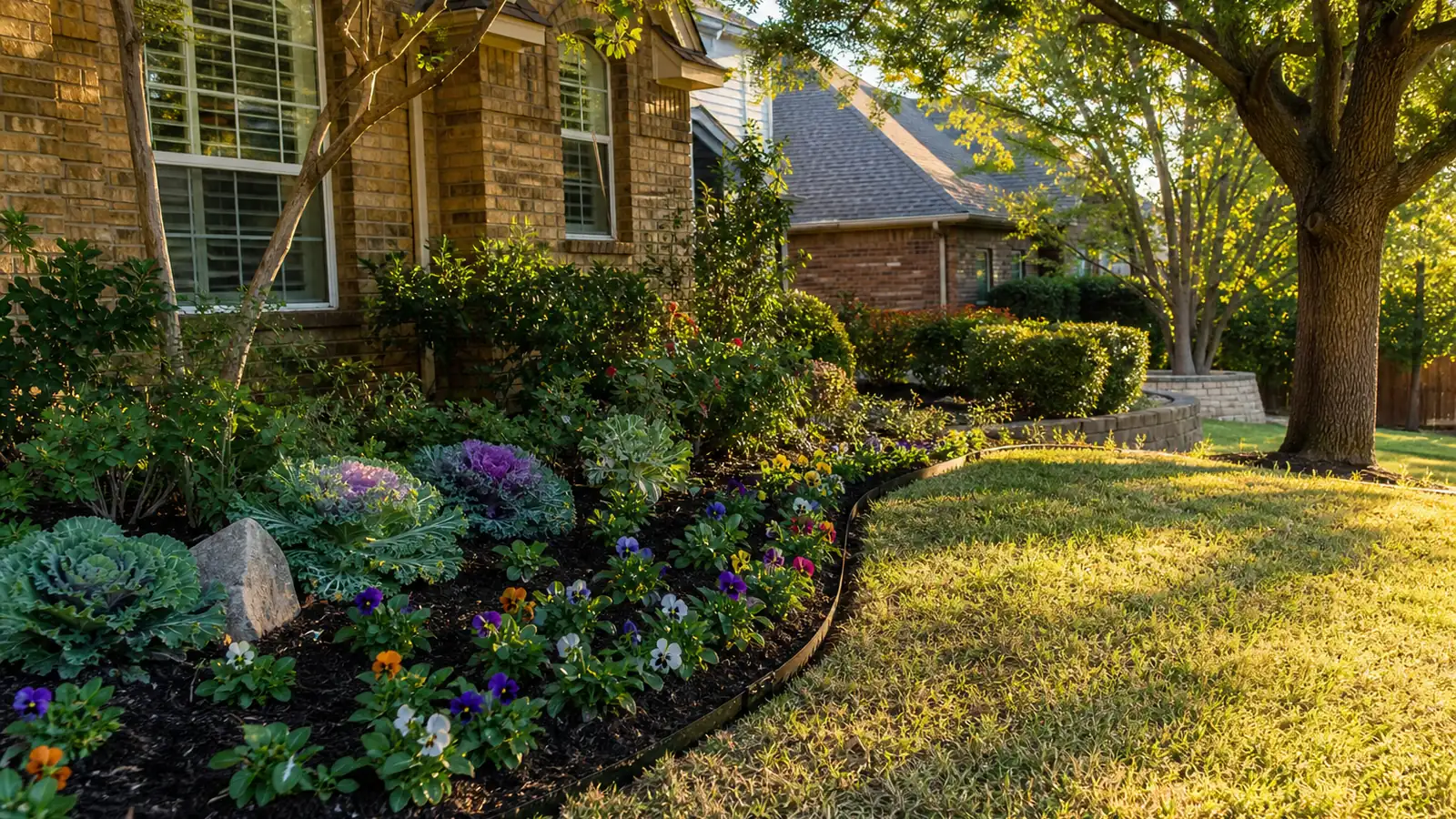
Fall is the best time to install a new flower bed in North Texas. September and October soil still holds summer warmth, so roots establish fast. The air has cooled enough that new plants are not fighting for their lives on day one. A bed built now gets cool-season color through winter and a head start that spring-installed beds never catch. The one thing fall does not change is the clay underneath, which is why bed construction matters as much as plant choice.
This guide covers why the fall window works and how to build a bed that drains in clay soil. It also covers what to plant for color that lasts into winter. The finishing details decide whether a bed looks sharp for one season or five. It picks up where fall flower bed preparation leaves off, moving from refreshing an existing bed to installing a new one from bare ground. It is written for homeowners across Keller, Southlake, and Colleyville.
Ready to get started? Conroy's Lawn & Landscape provides professional lawn care and landscaping across Keller, Southlake, Grapevine, Colleyville, and the surrounding North Texas communities. Call 817.745.0424, text 817.909.6875, or email service@conroyslawnandlandscape.com for a free quote today.
Why does fall beat spring for new beds?
Fall wins on soil temperature, water, and timing. Warm soil with cool air is the ideal establishment condition, and North Texas gets that combination in only one season. Spring offers the opposite trade: cold soil that slows roots, followed almost immediately by heat that punishes anything shallow-rooted.
The water math favors fall too. Autumn rains are steadier, evaporation drops, and a new bed needs a fraction of the irrigation a spring bed demands through its first months. By the time next summer arrives, a fall-installed bed has a full root system under it. The same logic drives the fall planting advice in fall planting for Texas perennials. It applies double to beds that combine perennials with seasonal color.
What can actually be planted this late in the year?
More than most homeowners expect. Cool-season annuals like pansies, violas, snapdragons, and dianthus go in from late September onward and bloom into winter. Perennials, shrubs, and ornamental grasses establish beautifully in fall. Spring bulbs go in from late October once the soil cools. The only things off the menu are warm-season annuals, which the first frost will take regardless of when they were planted.
How do you build a bed that drains in clay?
A flower bed in North Texas is a construction project before it is a planting project. Native clay drains slowly, and a bed dug straight into it becomes a bowl that collects water and rots roots. The build sequence below is what separates beds that thrive from beds that get replanted every year.
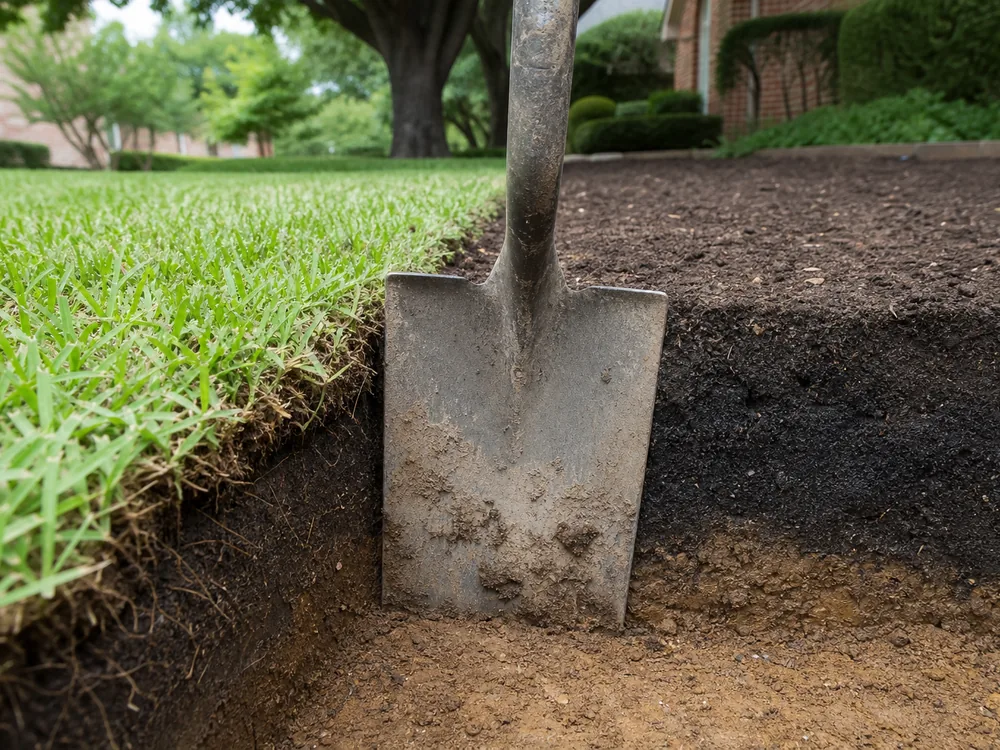
- Mark the shape and cut the edge. A clean spade-cut or steel edge keeps turf out and mulch in, and curved edges mow easier than tight corners.
- Kill or strip the turf inside the line. Bermuda left under a new bed will come up through it for years.
- Amend deep, not shallow. Work several inches of compost into the top of the native clay, or build the bed up with quality bedding mix. Raising the profile a few inches above grade is the simplest drainage insurance there is.
- Set plants at the right height. Root balls sit at or slightly above grade in clay, never sunk below it.
- Water in, then mulch. Two to three inches of mulch, pulled back from stems, finishes the job and steadies soil temperature through the first freezes.
Bed placement is worth a moment of honesty about water. A bed at the bottom of a slope or under a roof valley will fight drainage forever, no matter how well it is amended. If the chosen spot collects water after storms, fix the water problem first. The diagnostic approach in the French drain guide applies to beds exactly as it does to lawns.
What should go in a fall bed for lasting color?
The strongest fall beds layer three kinds of plants. The bed then holds structure and color as the seasons turn rather than emptying out after one bloom cycle.
| Layer | Role | Reliable North Texas choices |
|---|---|---|
| Structure | Holds the bed's shape year round | Dwarf yaupon holly, boxwood, ornamental grasses |
| Cool-season color | Blooms fall into winter | Pansies, violas, snapdragons, dianthus, ornamental kale |
| Spring surprise | Planted now, pays off in March | Daffodils, tulips (pre-chilled), summer perennials |
Spacing is the discipline that separates professional beds from crowded ones. Cool-season annuals fill in fast in warm fall soil, and planting them nose to nose wastes plants and invites disease in humid stretches. Leaving the labeled spacing feels sparse for two weeks and looks right for five months.
Ready to get started? Conroy's Lawn & Landscape provides professional lawn care and landscaping across Keller, Southlake, Grapevine, Colleyville, and the surrounding North Texas communities. Call 817.745.0424, text 817.909.6875, or email service@conroyslawnandlandscape.com for a free quote today.
Should a new bed get its own irrigation?
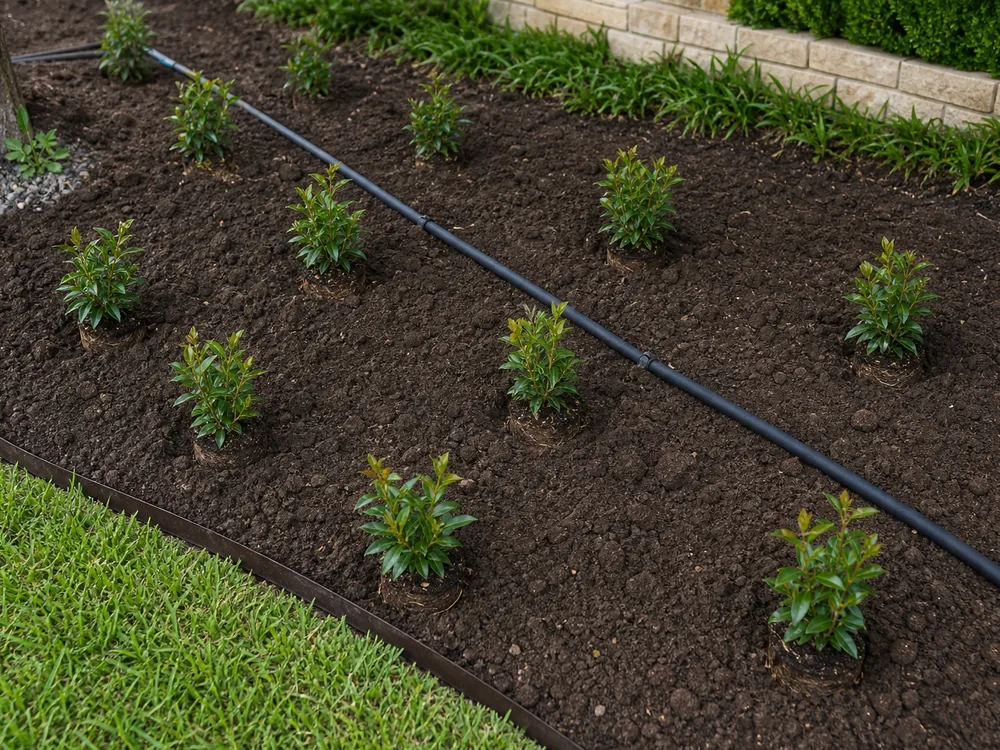
If the bed sits within reach of an existing sprinkler zone, the honest answer is usually to convert that coverage to drip. Spray heads built for turf soak foliage and waste water on mulch. A drip line laid under the mulch puts water at the roots, where cool-season color actually wants it. Drip also keeps leaves dry, which matters for pansies and dianthus in a humid autumn stretch.
Beds beyond the reach of existing zones can run for a season on hand watering. A bed meant to rotate color year after year earns a permanent line. Running one is far easier during construction than after, which is the same trench-once logic that applies to every other part of a landscape build.
What keeps a new bed looking sharp?
The first six weeks decide the first year. New beds need steady moisture while roots knit into the amended soil. That usually means watering deeply once or twice a week through a dry fall, then backing off as winter arrives. A light feeding at planting helps cool-season color, and after that the bed mostly needs edges kept clean and mulch topped as it thins.
Winter care is lighter than most people fear. Established pansies and violas take typical North Texas frosts without help. A sheet of frost cloth on the few hard-freeze nights protects the more tender choices. The bigger winter risk is soggy soil. That risk is the whole reason the bed was built raised and amended in the first place, so the extra work at install pays off in January. Beds that struggle through winter almost always have a drainage problem wearing a cold-weather costume.
Flower bed installation across Keller and Tarrant County
Our crews install beds across Keller, Southlake, Colleyville, Grapevine, and the surrounding cities every fall, and the calendar fills the same way each year. September and early October bookings get the full establishment window, while November installs still succeed but lean harder on plant selection. Billy Conroy walks each property first, because sun exposure, roof runoff, and existing irrigation decide the design before any plant list does.
Bed work rarely stands alone. New beds pair naturally with landscape design and installation when the whole front is being rethought. Ongoing flower bed maintenance keeps the seasonal rotations coming after the install. Homeowners comparing this against a broader fall refresh should start with the fall bed preparation guide to see which project their beds actually need.
Frequently asked questions about fall flower beds
When should fall flower beds go in around Keller?
Late September through October is the sweet spot. Soil is still warm enough for roots to establish quickly, the worst heat has passed, and cool-season color planted then carries the bed into winter. Waiting until November still works for most plants, but the establishment window shortens.
What flowers survive a North Texas winter?
Pansies, violas, snapdragons, dianthus, and ornamental kale and cabbage are the reliable cool-season core. All of them shrug off typical North Texas frosts, and pansies and violas bloom straight through most winters. Hard freezes may pause blooming for a week, but established plants recover.
Do new beds need amended soil in clay?
Yes. Native clay holds water and starves roots of air. A new bed needs several inches of compost worked in, or a raised profile built with bedding mix. The amendment is the difference between roots that spread and plants that sit in a clay bowl collecting water.
How much mulch should a new bed get?
Two to three inches, kept pulled back from plant stems. That depth insulates roots through temperature swings, holds moisture between waterings, and keeps most weeds from establishing. More than three inches starts to smother, and mulch piled against stems invites rot.
Ready to get started? Conroy's Lawn & Landscape provides professional lawn care and landscaping across Keller, Southlake, Grapevine, Colleyville, and the surrounding North Texas communities. Call 817.745.0424, text 817.909.6875, or email service@conroyslawnandlandscape.com for a free quote today.