June Lawn Aeration Benefits for North Texas Clay Soil
North Texas lawns face some of the toughest growing conditions in the country. Between the intense summer heat, prolonged dry periods, and dense clay-heavy soil, homeowners often struggle to maintain thick, lush grass during the hottest months of the year. Many lawns start showing signs of stress long before fall arrives. Brown patches, thinning turf, standing water, compacted ground, and weak root systems become a common sight across neighborhoods throughout June.
One of the best ways to combat these seasonal lawn problems in Texas is through lawn aeration. While many homeowners think of aeration as only a spring or fall service, June is actually an important time to aerate warm-season lawns in North Texas.
When performed correctly, summer lawn aeration in Texas helps relieve soil compaction, improve water absorption, encourage deeper root growth, and prepare turfgrass for the extreme heat that defines North Texas summers. For lawns growing in heavy clay soil, aeration can be the difference between surviving summer and struggling through months of stress.
In this guide, we’ll explain why clay soil aeration in North Texas matters, how the June timing benefits your lawn, what red flags indicate your property needs aeration, and how professional aeration services can help strengthen your lawn before fall.
Why North Texas Clay Soil Causes Lawn Problems
North Texas is well known for its dense clay soil composition. While clay soil contains nutrients that grass can use, it also creates several major problems for turf health.
Clay soil particles are extremely small and tightly packed together. Over time, foot traffic, mowing equipment, rainfall, and irrigation further compress the soil. This creates compaction, which prevents oxygen, nutrients, and water from reaching the root zone effectively.
Compacted soil causes several common seasonal lawn problems in Texas, including:
- Poor drainage
- Standing water after rain
- Thin or patchy grass
- Weak root systems
- Increased weed growth
- Excess runoff
- Heat stress damage
- Increased disease pressure
- Difficulty absorbing fertilizer
Many homeowners continue watering more frequently when lawns struggle during summer, but the issue often starts below the surface. If roots cannot expand through compacted clay soil, the lawn cannot properly absorb moisture or nutrients.
This is where lawn aeration becomes critical.
What Is Lawn Aeration?
Lawn aeration is the process of removing small plugs of soil from the lawn to relieve compaction and create channels for air, water, and nutrients to penetrate the root zone.
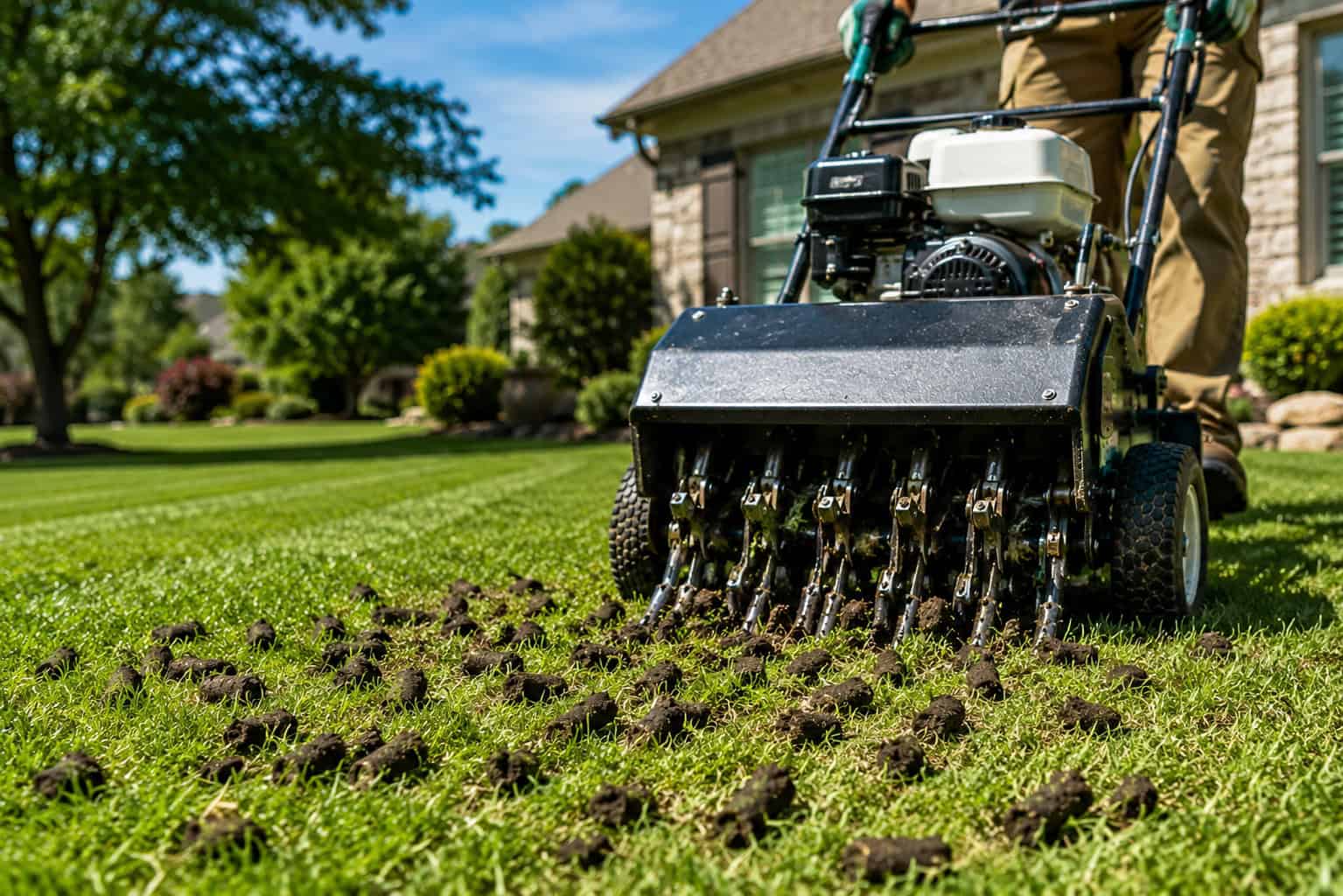
Core aeration is the most effective method for North Texas lawns. Specialized aeration equipment removes small cylindrical plugs from the ground, typically spaced every few inches across the lawn.
These openings allow the soil to:
- Breathe more effectively
- Absorb irrigation properly
- Reduce runoff
- Encourage stronger root development
- Improve nutrient uptake
- Increase drought tolerance
- Reduce soil hardness
For heavy clay soil aeration in North Texas, this process is especially important because clay tends to compact faster than sandy or loamy soil types.
Why June Is an Ideal Time for Lawn Aeration in Texas
Many homeowners assume lawn aeration should only happen in spring or fall, but June offers several unique benefits for warm-season grasses like Bermuda and Zoysia.
Warm-Season Grass Is Actively Growing
During June, warm-season grasses are actively growing and recovering quickly. This allows the lawn to heal efficiently after aeration while taking advantage of improved soil conditions.
Aerating dormant or slow-growing grass can delay recovery, but June aeration supports rapid root development during peak growing season.
Aeration Improves Summer Water Absorption
North Texas summers often bring inconsistent rainfall and watering restrictions. Compacted lawns waste significant amounts of water through runoff.
Aeration helps irrigation penetrate deeper into the soil profile instead of pooling on the surface. This improves watering efficiency while encouraging roots to grow deeper in search of moisture.
Lawns with deeper roots generally handle heat stress far better during July and August.
Reduces Heat Stress Before Peak Summer Temperatures
By June, North Texas lawn care is preparing for the hottest part of summer. Aeration relieves pressure on stressed root systems before extreme heat arrives.
Without aeration, compacted clay soil traps heat and limits oxygen availability underground. This weakens turfgrass and increases vulnerability to drought damage.
Aeration creates airflow beneath the surface, helping roots remain healthier during periods of prolonged heat.
Prepares the Lawn Before Fall Recovery
Lawn aeration before fall in DFW gives grass time to strengthen before the cooler weather arrives.
A healthier summer root system allows lawns to:
- Recover faster after summer stress
- Resist weed invasion
- Improve turf density
- Absorb fall fertilization more effectively
- Enter dormancy in better condition
Waiting until fall to address severe compaction may delay recovery and reduce overall lawn performance.
Signs Your North Texas Lawn Needs Aeration
Many lawns in North Texas would benefit from annual aeration, but some properties show especially strong signs of compaction.
Water Pools on the Surface
If irrigation or rainfall creates puddles that remain for long periods, compacted clay soil is likely preventing water penetration.
Grass Feels Thin or Weak
Lawns struggling to maintain density often have restricted root systems caused by compacted soil.
Soil Feels Extremely Hard
If it's difficult to push a screwdriver or garden tool into the ground, the soil may be heavily compacted.
Increased Weed Growth
Compacted lawns create weak turf conditions that allow weeds to spread more aggressively.
Brown Patches During Heat
Grass with shallow roots dries out quickly during summer heat waves.
Heavy Foot Traffic
Children, pets and pet waste, outdoor entertaining, and lawn equipment all contribute to soil compaction over time.
If your lawn experiences any of these issues, summer lawn aeration in Texas may significantly improve turf health.
Benefits of Clay Soil Aeration in North Texas
Improved Root Growth
Healthy lawns begin below the surface. Aeration allows roots to spread deeper into the soil profile where moisture remains more stable.
Deeper roots create:
- Better drought tolerance
- Stronger turf density
- Increased resilience
- Improved nutrient access
Better Fertilizer Performance
Fertilizers can't work effectively when nutrients remain trapped near the surface.
Aeration allows nutrients to move deeper into the root zone, increasing fertilizer efficiency and reducing waste.
Reduced Runoff and Water Waste
Clay soil often causes irrigation runoff, especially on sloped properties.
Aeration improves infiltration, helping lawns absorb more water instead of losing it across sidewalks, driveways, and streets.
Stronger Heat Resistance
Compacted lawns struggle during North Texas summers.
Aeration improves oxygen flow and moisture access, helping turf survive periods of extreme heat with less damage.
Enhanced Overseeding Results
If overseeding is planned later in the season, aeration creates ideal seed-to-soil contact.
This improves germination rates and establishment success.
Reduced Thatch Buildup
Aeration helps break down excess thatch accumulation by improving microbial activity within the soil.
Excessive thatch can block water penetration and create disease-prone conditions.
Best Grass Types for Summer Aeration in Texas
Most warm-season grasses commonly used in North Texas benefit from June aeration.
Bermuda Grass
Bermuda grass responds extremely well to summer aeration because it spreads aggressively during warm weather.
Aeration encourages:
- Faster lateral growth
- Stronger root systems
- Improved color
- Increased drought tolerance
Zoysia Grass
Zoysia lawns can become especially compacted over time due to dense turf structure.
Aeration improves:
- Root expansion
- Drainage
- Nutrient absorption
- Overall turf thickness
St. Augustine Grass
While St. Augustine requires careful aeration timing, moderate summer aeration can improve heavy clay soil conditions when performed properly.
Professional evaluation is important for avoiding unnecessary stress.
Common Seasonal Lawn Problems Texas Homeowners Face in Summer
June often marks the beginning of several major lawn challenges across North Texas.
Heat Stress
High temperatures combined with compacted soil create severe moisture stress for turfgrass.
Fungus and Disease
Poor drainage and excessive moisture retention near the surface increase disease pressure.
Weed Pressure
Weak lawns allow opportunistic weeds to spread rapidly during summer.
Soil Cracking
North Texas clay soil expands and contracts dramatically with moisture fluctuations.
Aeration helps moderate these stress cycles by improving water movement.
Poor Irrigation Efficiency
Without aeration, irrigation systems often waste water due to runoff and shallow absorption.
Addressing these problems early through aeration can improve lawn performance throughout the remainder of summer.
What to Expect After Lawn Aeration
Immediately after aeration, small soil plugs remain visible across the lawn. These plugs naturally break down over time and return nutrients back into the soil.
Within several weeks, homeowners typically notice:
- Improved lawn color
- Better water absorption
- Reduced puddling
- Stronger grass growth
- Increased turf density
- Less heat stress
Proper post-aeration care can further maximize results.
Lawn Care Tips After Aeration
Water Deeply
After aeration, deep watering helps moisture penetrate newly opened soil channels.
Fertilize Strategically
Applying fertilizer after aeration improves nutrient absorption and supports recovery.
Avoid Heavy Traffic
Minimize unnecessary lawn traffic for several days after aeration.
Continue Proper Mowing
Maintain recommended mowing heights for your grass type to encourage healthy growth.
Monitor Irrigation
Aerated lawns often require less frequent watering because moisture penetrates deeper into the soil.
Professional Lawn Aeration vs DIY Aeration
While rental aerators are available, professional lawn aeration services often produce better long-term results.
Professional lawn care companies understand:
- Proper aeration depth
- Clay soil conditions
- Timing for warm-season grasses
- Irrigation considerations
- Lawn stress indicators
- Fertilization integration
DIY aeration mistakes can sometimes damage turf or fail to adequately relieve compaction.
Professional services also use commercial-grade equipment capable of penetrating dense North Texas clay soil more effectively.
Combining Aeration with Other Lawn Services
Aeration works best when combined with a comprehensive lawn care maintenance strategy.
Many North Texas homeowners pair aeration with:
- Fertilization programs
- Weed control
- Lawn disease prevention
- Irrigation optimization
- Soil amendments
- Seasonal lawn maintenance
For additional seasonal lawn preparation tips, visit our guide on preparing landscapes for summer heat.
If weeds are already becoming a problem in your lawn, our early summer weed prevention guide can also help.
How Often Should North Texas Lawns Be Aerated?
Most lawns growing in heavy clay soil benefit from annual aeration.
However, lawns with severe compaction, heavy traffic, or drainage issues may benefit from aeration twice per year.
Factors affecting aeration frequency include:
- Soil composition
- Lawn usage
- Grass type
- Irrigation practices
- Drainage conditions
- Pet activity
Professional lawn evaluations can determine the best schedule for your property.
Strengthen Your Lawn Before Summer Stress Gets Worse
June is one of the best opportunities to improve your lawn's health before extreme summer conditions fully arrive.
If your lawn struggles with compacted clay soil, standing water, thinning turf, or summer stress, professional lawn aeration can dramatically improve overall performance.
At Conroy’s Lawn and Landscape, we help North Texas homeowners build healthier, stronger lawns through professional aeration, fertilization, irrigation support, and seasonal lawn care services designed specifically for Texas conditions.
Whether your lawn needs relief from compacted clay soil or preparation before fall recovery season, our team can create a customized plan to improve long-term lawn health.
Contact Conroy’s Lawn and Landscape today to schedule your summer lawn aeration service and give your lawn the foundation it needs to thrive through the toughest Texas weather.