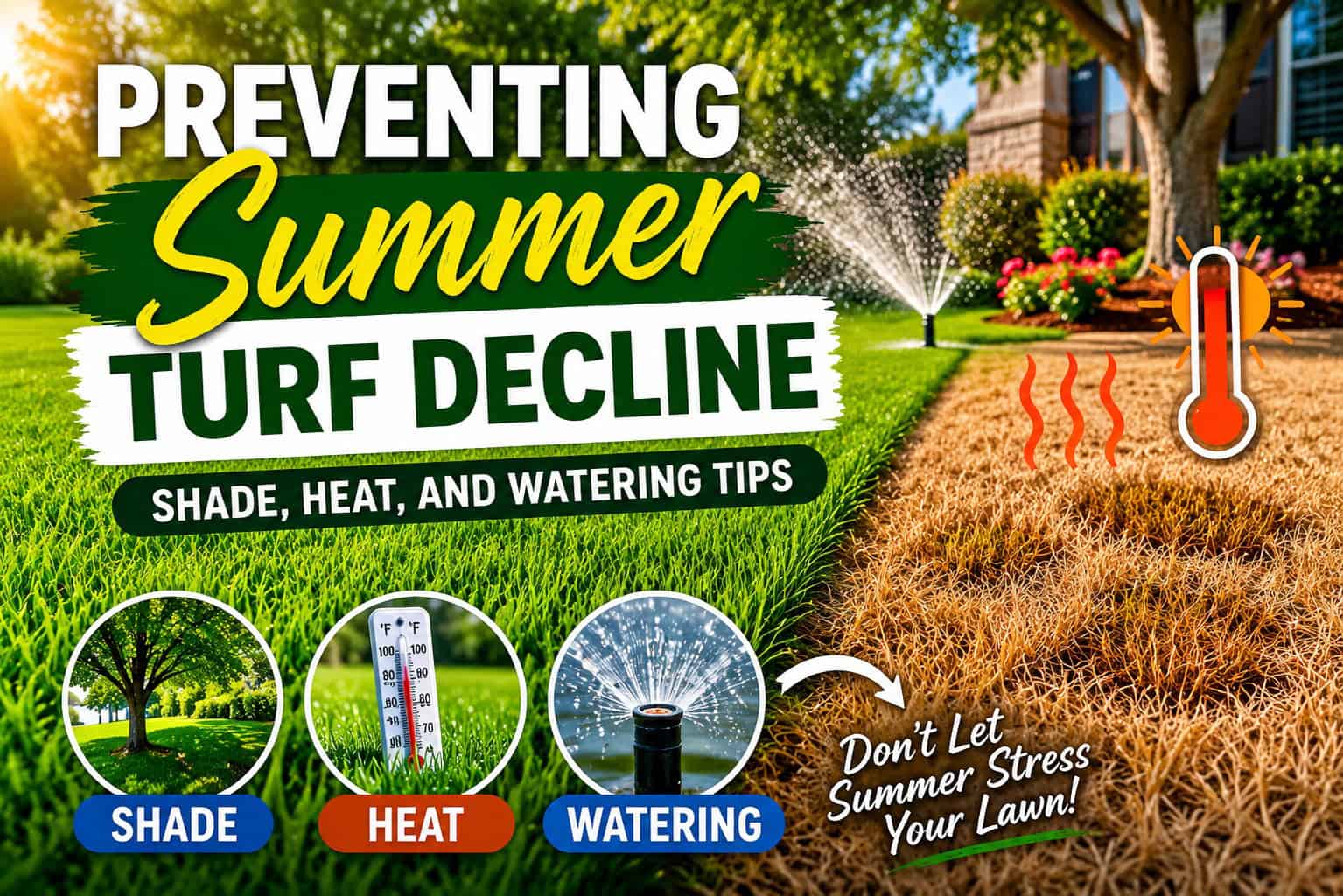
Preventing Summer Turf Decline: Shade, Heat, and Watering Tips for North Texas Lawns
Summer in North Texas can be absolutely brutal on lawns. The long stretches of intense sun, high humidity, drought conditions, and watering mistakes can quickly turn a healthy green lawn into a patchy, stressed mess. Many homeowners and property managers start noticing brown spots, thinning grass, dry areas, or fungal problems by early summer, and without the right care, those problem just get even worse through July and August.
The good news is that summer turf decline can be prevented. Understanding how heat, sunlight, watering habits, and soil conditions affect your lawn can make a huge difference in keeping grass healthy during our extreme Texas temperatures.
In this guide, we’ll break down the most common causes of summer turf decline in North Texas and explain practical ways to protect your lawn through proper watering, shade management, mowing practices, and seasonal maintenance.
What Is Summer Turf Decline?
Summer turf decline refers to the gradual weakening of lawn grass during periods of extreme heat and environmental stress. In North Texas, this happens when temperatures remain above 95 degrees for extended periods of time.
Warm-season grasses like Bermuda and St. Augustine are designed for Texas climates, but even these grasses can struggle when exposed to:
- Excessive heat
- Poor watering habits
- Soil compaction
- Fungal disease
- Drought stress
- Overwatering
- Heavy foot traffic
- Improper mowing
- Lack of shade balance
When lawns become stressed out, they lose their ability to recover quickly. The result is discoloration, thinning turf, bare spots, and increased vulnerability to weeds and disease.
Signs Your Lawn Is Struggling with Heat Stress
One of the most common summer lawn issues in North Texas is heat stress. Heat-stressed turf often looks similar to drought damage or fungal disease, which can make diagnosis difficult.
Common signs of lawn heat stress include:
Grass Turning Dull or Grayish Green
Healthy grass has a rich, green color. Heat-stressed turf develop into s a faded, bluish-gray appearance before turning brown.
Footprints Remaining Visible
If your footprints stay visible after walking across the lawn, the grass blades are lacking moisture and elasticity.
Dry or Crispy Grass Blades
Grass that feels brittle or crunchy is usually dehydrated.
Brown Patches Appearing in Sunny Areas
Areas exposed to direct afternoon sunlight often decline first.
Thinning Turf
Heat stress weakens root systems, causing grass density to decrease.
Drought Stress vs Overwatering
One of the biggest lawn care mistakes homeowners make during summer is assuming brown grass always needs more water.
In reality, both underwatering and overwatering can create nearly identical symptoms.
Understanding the difference between drought stress and overwatering is critical for preventing long-term turf damage.
Signs of Drought Stress
Drought-stressed lawns typically show:
- Dry, hard soil
- Grass blades curling inward
- Footprints remaining visible
- Grass turning straw-colored
- Soil pulling away from sidewalks or edges
- Slow lawn recovery after watering
In North Texas clay soil, drought stress can become severe because compacted soil prevents water from reaching deep roots.
Signs of Overwatering
Overwatered lawns often develop:
- Mushy or soggy soil
- Yellowing grass
- Fungus growth
- Mushrooms
- Thin grass blades
- Increased weeds
- Brown patches surrounded by green grass
- Shallow root systems
Overwatering is especially common during humid Texas summers when homeowners water daily without checking soil moisture levels.
Too much water limits oxygen in the soil, suffocating roots and encouraging fungal disease.
Smart Watering Tips for North Texas Lawns
Proper watering is one of the most important parts of preventing summer turf decline.
The goal is deep, infrequent watering rather than shallow daily watering.
Water Early in the Morning
The best time to water lawns in North Texas is between 4 a.m. and 9 a.m.
Morning watering allows moisture to soak into the soil before temperatures rise while reducing evaporation.
Watering at night can increase fungal disease because moisture remains trapped on grass blades overnight.
Water Deeply, Not Frequently
Most North Texas lawns need approximately 1 to 1.5 inches of water per week during summer.
Deep watering encourages roots to grow further into the soil, making grass more drought-resistant.
Frequent shallow watering creates weak root systems that struggle during heat waves.
Use Cycle Watering for Clay Soil
North Texas clay soil absorbs water slowly.
Instead of watering for one long session, divide irrigation into shorter cycles:
- Water for 10 minutes
- Wait 30 minutes
- Water again
This helps reduce runoff and allows water to penetrate deeper.
Adjust Irrigation for Shade and Sun
Not all areas of your lawn need the same amount of water.
Sunny sections dry out much faster than shaded areas.
Overwatering shaded areas can lead to fungal disease while underwatering sunny zones creates heat stress.
A properly zoned irrigation system can dramatically improve lawn health.
The Role of Shade in Lawn Health
Shade can either help or hurt your lawn depending on how it’s managed.
During extreme Texas heat, partial shade helps reduce turf stress and water loss.
However, too much shade limits photosynthesis and weakens grass growth.
Benefits of Partial Shade
Strategic shade helps:
- Lower soil temperatures
- Reduce evaporation
- Protect grass during heat waves
- Improve moisture retention
- Decrease watering demands
Trees can provide valuable protection during peak summer temperatures.
Problems Caused by Excessive Shade
Too much shade can lead to:
- Thin turf
- Bare spots
- Increased fungus
- Weak root systems
- Moss growth
- Poor air circulation
St. Augustine handles moderate shade better than Bermuda grass, but even shade-tolerant grasses need some sunlight.
Tree Maintenance Matters
Overgrown tree canopies often contribute to summer lawn decline.
Selective tree trimming improves:
- Sunlight penetration
- Airflow
- Moisture balance
- Disease prevention
Proper tree care can dramatically improve turf health beneath mature trees.
Brown Spots in Lawns During Summer
Brown spots are one of the most frustrating lawn problems homeowners face during Texas summers.
The challenge is that brown patches can come from multiple causes, so it's hard to pinpoint what is the actual cause.
Common Causes of Brown Spots
Heat Stress
Direct sunlight and high temperatures dry out grass quickly.
Fungal Disease
Humidity combined with excess moisture creates ideal conditions for fungus.
Grub Damage
Grubs feed on grassroots and create irregular dead patches.
Pet Urine
High nitrogen concentrations burn turf.
Irrigation Problems
Broken sprinkler heads often leave dry spots.
Soil Compaction
Compacted clay soil limits root growth and water absorption.
Scalping from Mowing
Cutting grass too short exposes soil to excessive heat.
How to Identify the Cause
Accurate diagnosis matters.
For example:
- Circular brown spots may indicate fungus
- Irregular dry areas may suggest irrigation issues
- Turf pulling up easily could signal grubs
- Dry edges near sidewalks often point to heat stress
Treating the wrong issue can worsen lawn decline.
Proper Mowing Helps Prevent Heat Stress
Many homeowners unknowingly damage their lawns by mowing too short during summer.
Short grass exposes soil directly to sunlight, increasing heat stress and water evaporation.
Ideal Mowing Heights for North Texas Grass
Bermuda Grass
Maintain at 1.5 to 2.5 inches.
St. Augustine Grass
Maintain at 3 to 4 inches.
Follow the One-Third Rule
Never remove more than one-third of the grass blade at a time.
Removing too much height shocks the lawn and weakens root systems.
Keep Mower Blades Sharp
Dull blades tear grass instead of cutting cleanly.
Torn grass loses moisture faster and becomes more vulnerable to disease.
Soil Health and Summer Turf Survival
Healthy soil is one of the biggest factors in lawn resilience.
Compacted or nutrient-deficient soil struggles to support turf during high heat.
Benefits of Healthy Soil
Healthy soil improves:
- Water absorption
- Root growth
- Nutrient availability
- Drought resistance
- Microbial activity
Aeration Helps Reduce Summer Stress
Core aeration helps relieve compacted clay soil.
Benefits include:
- Better oxygen flow
- Improved water penetration
- Stronger root systems
- Reduced runoff
Aeration is especially beneficial for high-traffic lawns.
Fertilization Timing Matters
Applying too much nitrogen during extreme heat can stress turf further.
Summer fertilization should focus on balanced nutrients rather than aggressive growth.
Professional lawn care programs often adjust fertilizer blends seasonally to support turf without overstimulating growth.
Common Summer Lawn Care Mistakes
Many summer lawn problems are caused by avoidable lawn maintenance habits.
Watering Every Day
Daily watering creates shallow roots and increases disease risk.
Cutting Grass Too Short
Scalped lawns dry out rapidly.
Ignoring Irrigation Problems
Broken sprinkler heads can cause severe dry spots quickly.
Overfertilizing During Heat Waves
Excess nitrogen increases stress during high temperatures.
Treating Every Brown Spot the Same
Different problems require different solutions.
Heavy Lawn Traffic During Drought
Foot traffic damages already stressed turf. Letting pet waste sit out for days isn't good either.
Creating a Summer Lawn Survival Plan
The healthiest North Texas lawns usually follow a consistent seasonal maintenance plan.
A proactive approach helps lawns withstand heat before damage even begins.
Weekly Lawn Care Checklist
Monitor Soil Moisture
Check soil before watering.
Inspect Irrigation Systems
Look for broken heads and dry zones.
Adjust Mowing Height
Raise mowing height during extreme heat.
Watch for Fungus
Look for discoloration or spreading patches.
Limit Lawn Traffic
Avoid unnecessary stress during drought periods.
Remove Excess Thatch
Thick thatch traps moisture and heat.
Professional Lawn Care Can Make a Difference
Texas summers are hard on lawns, especially when heat waves, drought conditions, and watering restrictions combine together.
Professional lawn care services help identify problems early before widespread turf decline occurs.
An experienced lawn care team can assist with:
- Irrigation adjustments
- Disease prevention
- Fertilization timing
- Aeration
- Soil improvement
- Drainage correction
- Turf recovery strategies
Preventive maintenance is often far less expensive than full lawn restoration.
Protect Your Lawn Before Summer Damage Starts
Once severe turf decline begins, recovery becomes much harder and more expensive.
The best defense against summer lawn damage is proactive care focused on watering efficiency, soil health, mowing practices, and environmental balance.
North Texas lawns face intense seasonal challenges, but with proper maintenance and early intervention, healthy green turf is absolutely achievable throughout the summer.
Whether you’re dealing with brown spots, thinning grass, irrigation issues, or lawn heat stress, taking action early can protect your investment and keep your property looking its best.
If your lawn is already showing signs of summer stress, now is the time to address the problem before the hottest part of the season arrives.
Contact Conroy’s Lawn and Landscape for professional lawn care, irrigation solutions, seasonal maintenance, and expert guidance tailored specifically for North Texas lawns.